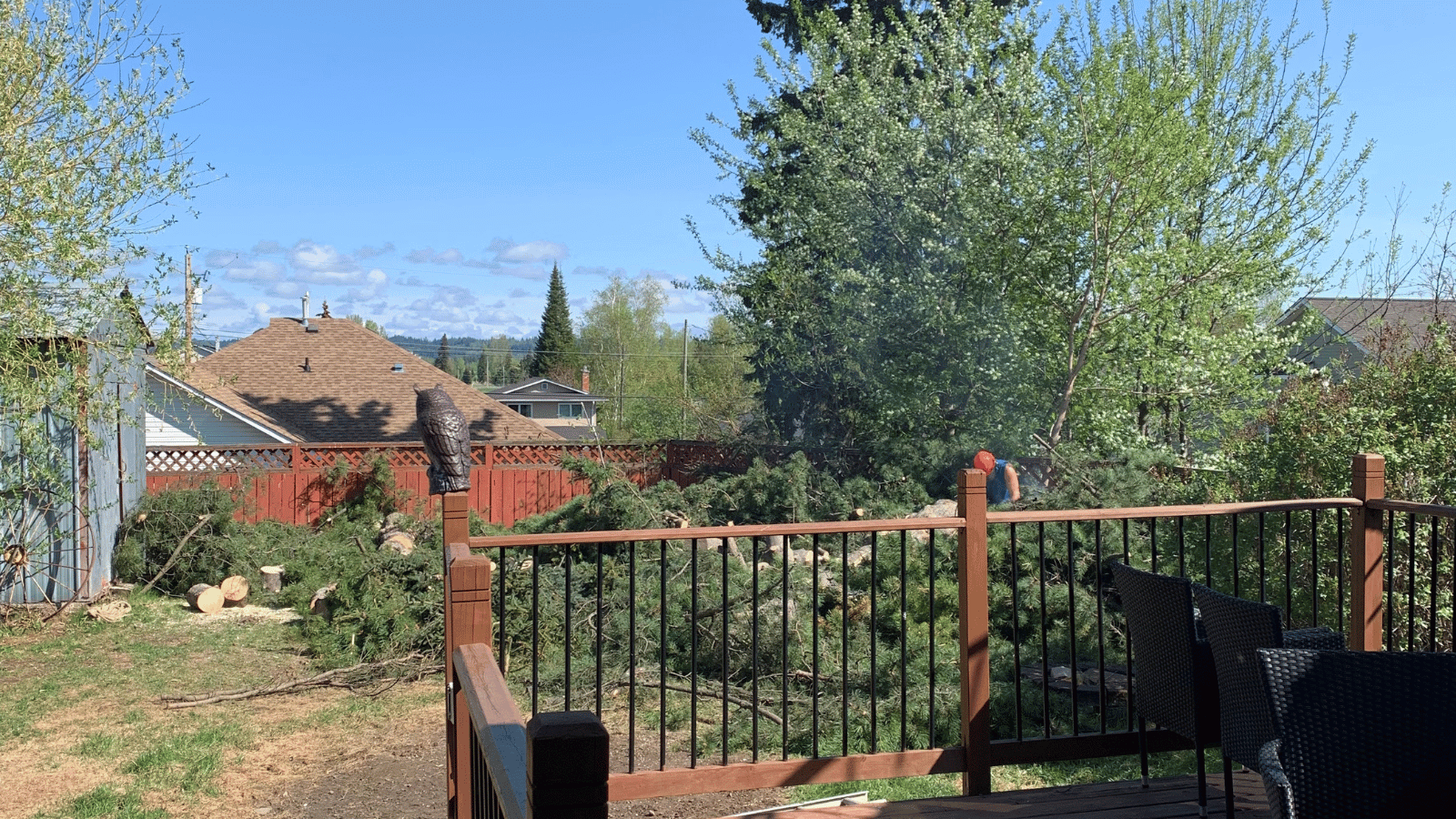
Treat the scene as unstable until emergency responders, the utility and qualified professionals say otherwise. The first job is to keep people away from the tree, damaged structure and any electrical hazard.
Start with immediate safety
Leave the damaged area if the structure is shifting, the roof is open, you smell gas, or water is entering electrical areas. Do not climb onto the roof or cut branches that are supporting weight.
- Call 911 when anyone is injured or there is immediate danger
- Assume every fallen power line is live and stay at least 10 metres away
- Keep family, neighbours and pets outside the fall zone
- Do not move a tree that is touching a building, vehicle or utility line
Contact the right people
Report electrical hazards to 911 and BC Hydro. Contact your insurer as soon as it is safe and follow its instructions before arranging permanent repairs. Insurance Bureau of Canada says home policies usually cover sudden damage caused by wind or lightning, but coverage depends on the policy.
A tree service can assess and remove the tree after electrical and structural hazards are controlled. The removal plan may need to preserve evidence or coordinate with roofing, restoration or utility crews.
Document only from a safe location
Take wide photos from the ground if you can do so without entering the fall zone. Record the time, weather and visible damage. Do not delay an emergency response for photographs, and do not enter a damaged room to retrieve belongings.


